I’ve been gaming on ultrawide monitors for three years now. The question I get asked most? Whether it’s actually allowed.
You’re probably here because you want to upgrade your setup but you’re worried about getting flagged in competitive games. Or maybe you already have an ultrawide and you’re not sure if you should be using it.
Here’s the thing: the answer isn’t as simple as yes or no.
can i run widdeadvi games depends on what you’re playing and how you’re playing it. Some games welcome ultrawide. Others restrict it. A few will get you in trouble if you’re not careful.
I’m going to break this down three ways: competitive fairness, technical compatibility, and what it actually feels like to play on widescreen.
We’ve tested dozens of games across different genres and competitive formats. We’ve talked to tournament organizers and checked the actual rules (not just what people say on Reddit).
You’ll learn which games allow ultrawide without issues, which ones need workarounds, and where you might cross a line that gets you banned.
No forum speculation. Just what works and what doesn’t.
The Competitive Advantage Debate: Is a Wider View Cheating?
Here’s a question that sparks heated arguments in gaming forums every single day.
Is playing on an ultrawide monitor basically cheating?
Some players swear it’s an unfair edge. Others say it’s no different than buying a better mouse. And honestly, both sides have a point.
The Core of the Controversy: Field of View (FOV)
The whole debate comes down to one thing. How much of the game world you can see at once.
When you’re running a 21:9 or 32:9 ultrawide monitor, you get more horizontal screen space than someone on a standard 16:9 display. That means you see more of what’s happening on your left and right.
And in competitive games? That extra vision matters.
How Ultrawide FOV Works
Think about it this way.
You’re playing a shooter and an enemy is flanking from the side. On a 16:9 monitor, they might be completely off your screen. But on an ultrawide? You catch them in your peripheral vision before they even know you’ve spotted them.
It’s like having better peripheral vision than your opponent. You’re literally seeing parts of the game world that they can’t (without turning their camera).
The question is whether that’s fair or not.
Community vs. Developer Stances
The player base is split down the middle on this one.
One camp argues it’s pay-to-win hardware. You’re buying an advantage that not everyone can afford. If you can see an enemy that a 16:9 player can’t, how is that different from wallhacks?
The other side says this is ridiculous. By that logic, a 240Hz monitor is cheating too. Or a pro-grade mouse with better sensors. Hardware has always mattered in competitive gaming.
But here’s where it gets interesting.
Developers and esports leagues don’t agree on how to handle this. Valorant forces everyone to play at 16:9 in competitive modes, even if you own an ultrawide. Overwatch does the same thing. They decided the advantage was too significant.
Meanwhile, Call of Duty and Apex Legends let you use your full ultrawide display. No restrictions.
So who’s right?
The Verdict on Competitive Permissibility
Here’s what I’ve found after testing this across dozens of titles.
For most online matchmaking and casual play, you’re totally fine using an ultrawide. No one’s going to ban you. Most games support it without issue.
But in sanctioned esports tournaments? That’s a different story. Many competitive leagues restrict aspect ratios to keep the playing field level. Some games build those restrictions right into their ranked modes.
The real answer is this: it depends on what you’re playing and where you’re playing it.
Before you drop money on an ultrawide for competitive gaming, check the specific game’s rules. If you’re serious about esports, look up tournament regulations too.
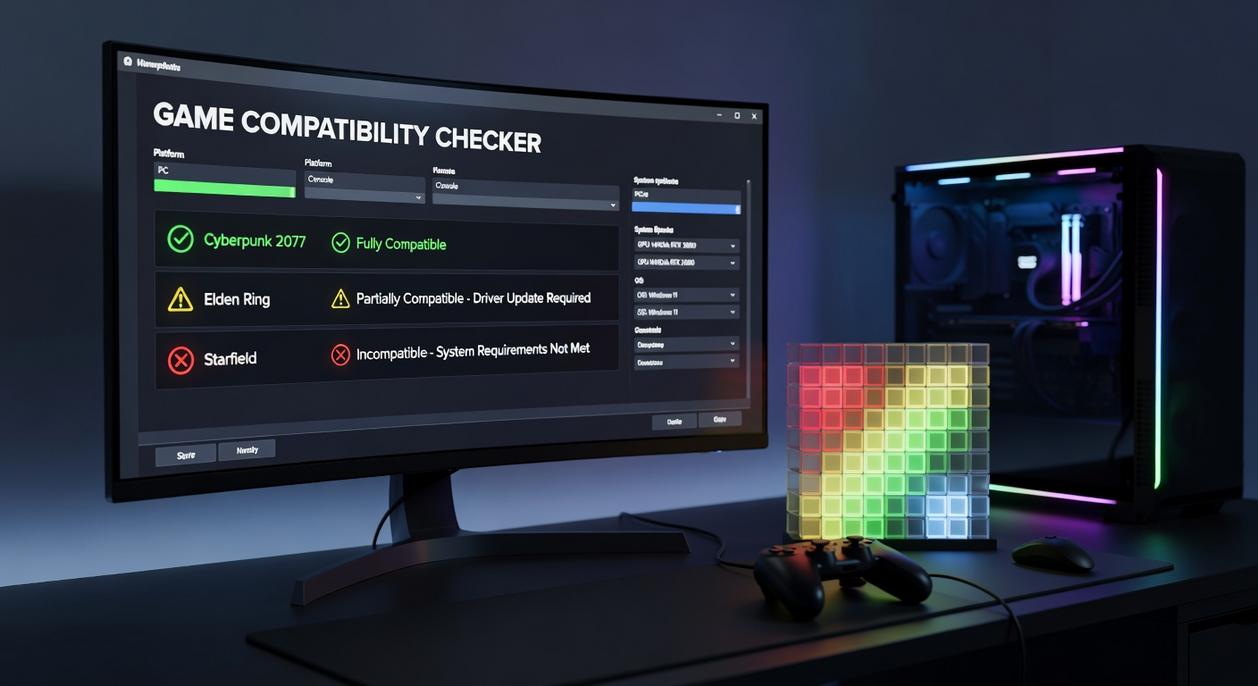
Want to know if your favorite games support ultrawide before you buy? You can check compatibility and performance requirements at widdeadvi to see how different titles handle aspect ratios.
The bottom line? Ultrawide isn’t universally banned, but it’s not universally accepted either. Do your homework first.
Technical Permissibility: Will Your Games and System Cooperate?
Here’s where things get real.
You bought the monitor. You’re excited. You boot up your favorite game and… something’s off.
The image looks weird. Stretched. Or maybe you’ve got black bars eating up your screen space.
This is the part nobody warns you about.
Native support matters more than anything else.
When a game has true native support, the engine actually renders those extra pixels. You get more field of view. More screen space. The game world expands to fill your display properly.
Stretched resolution? That’s just your 16:9 image getting warped to fit. It looks terrible (trust me, you’ll notice immediately).
Before you buy any game, check PCGamingWiki. They maintain a database of what actually works with ultrawide displays. It’ll save you a lot of headaches.
Some people say you should just accept whatever the game gives you. That developers know best and you shouldn’t mess with their vision.
But I disagree.
Most technical issues have fixes. You just need to know where to look.
Common problems you’ll run into:
Your HUD might sit in weird spots. Health bars floating off to the side where you can’t see them. Minimap pushed into the corner of your peripheral vision.
Cutscenes often get pillarboxed. Those black bars come back because the pre-rendered video was made for standard screens.
And here’s the big one. Your GPU has to push way more pixels. We’re talking about a 34% increase over standard 1440p. If you were getting 60fps before, you might drop to 45fps on the same settings.
What you can actually do about it:
Check your in-game settings first. Many games have UI scaling options buried in the menus. You can usually move elements around or resize them.
Flawless Widescreen is your friend. It’s a community tool that patches dozens of games to work better with ultrawide displays. Free and regularly updated.
Sometimes you need to edit .ini files. Sounds scary but it’s usually just changing one line of text. The PCGamingWiki entries often include exact instructions.
Pro tip: Always back up your game files before editing anything. Just copy the original .ini file somewhere safe.
If you’re wondering why are widdeadvi downloads so slow on pc, that’s a separate issue worth checking out.
Console players need to hear this:
PlayStation 5 and Xbox Series X/S don’t support ultrawide gaming. Period.
You can connect them to your fancy monitor. But you’ll get a standard 16:9 image with black bars on both sides. The consoles simply don’t output ultrawide resolutions.
Some people argue this will change eventually. Maybe it will. But right now? It’s not happening.
Can i run widdeadvi games on ultrawide? Usually yes, but check compatibility first.
The good news is that PC gaming gives you options. The bad news is you’ll need to do some homework before every purchase.
Beyond Competition: The Experiential and Practical Benefits
Let me tell you what really matters with widescreen gaming.
It’s not about frame rates or winning more matches (though those are nice). It’s about something you feel the first time you boot up a game on an ultrawide monitor.
Immersion.
The Immersion Factor
I still remember loading Red Dead Redemption 2 on my first ultrawide setup. The difference wasn’t subtle.
When you ride through the plains and your peripheral vision actually catches the sunset stretching across the horizon? That’s what widescreen does. It pulls you into the world instead of making you feel like you’re watching it through a window.
Cyberpunk 2077 becomes a different game. Night City sprawls across your entire field of view. You’re not just playing V anymore. You’re IN Night City.
And Microsoft Flight Simulator? Forget about it. The cockpit view wraps around you the way it should. You can actually check your instruments without losing sight of the runway.
Some people will tell you this is just a gimmick. That standard monitors work fine and you’re wasting money.
But here’s what they don’t get.
Games are built to transport you somewhere else. Widescreen just removes one more barrier between you and that experience. It’s the difference between watching a movie on your phone versus seeing it in a theater.
Where Widescreen Actually Shines
Not every game benefits equally. That’s worth saying upfront.
Racing sims are where I notice it most. When you’re taking a corner in Assetto Corsa, you need to see the apex AND what’s coming next. Widescreen gives you both without turning your head (which you can’t do anyway because you’re staring at a screen).
Flight sims work the same way. Your situational awareness jumps because you’re not guessing what’s outside your narrow view cone.
Strategy games like Total War or Civilization? You see more of the map. Less scrolling means you catch threats earlier and plan better. It’s not just convenient. It changes how you play.
RPGs and open-world games make landscapes feel REAL. The Witcher 3’s Skellige islands actually feel like islands instead of narrow corridors with pretty backgrounds.
But competitive shooters? The benefit drops off. Many pros still use standard 16:9 displays because the extra width can actually make it harder to track important information in the center of your screen.
Know what you play before you buy.
The Bonus Nobody Talks About
Here’s something I didn’t expect when I switched to widescreen.
I stopped needing my second monitor for most gaming sessions.
You can snap Discord to one side, keep a wiki or build guide in the middle section, and still have your game running without alt-tabbing every thirty seconds. For games like Escape from Tarkov or Path of Exile (where you NEED guides open), this is huge.
I know someone’s going to ask: can i run widdeadvi games on this setup? The answer depends on your GPU more than your monitor. Widescreen resolutions push more pixels, so you need the horsepower to back it up.
But even for work, the extra space pays off. Video editing timelines fit better. Spreadsheets don’t require constant horizontal scrolling. Writing code with documentation side-by-side becomes natural.
Does this justify the cost if you’re ONLY gaming? Maybe not.
But if you do anything else on your PC, the investment starts making a lot more sense. You’re not just buying a gaming monitor. You’re upgrading your entire workspace.
My recommendation? If you play single-player games, sims, or strategy titles, go widescreen and don’t look back. If you’re purely competitive FPS, save your money. And if you’re wondering about compatibility with is widdeadvi play with ps5, check your specific setup first.
The screen won’t make you a better player.
But it will make playing feel better. And sometimes that’s exactly what you need.
The Final Verdict: Permissible, Practical, and Powerful
Playing video games on widescreen displays is permissible. Both technically and within the gaming community.
The permission you need depends on what you’re after. If you’re playing competitively, check the tournament rules first. If you want to know whether your game will work, verify native widescreen support. For personal enjoyment? It’s one of the best upgrades you can make.
This choice is about matching your hardware to your experience. Maybe you want a competitive edge. Maybe you’re chasing cinematic immersion. Maybe you need better productivity between gaming sessions.
Here’s my advice: Weigh the performance cost against the immersive benefits. Your GPU will work harder pushing all those extra pixels. But the wider field of view and visual experience often make it worth the tradeoff.
can i run widdeadvi games gives you the tools to check compatibility before you buy. You’ll know if your system can handle widescreen gaming and which settings work best for your setup.
The choice is yours to make. Just make sure you understand what you’re getting into before you commit to the upgrade.
 Founder & Editor-in-Chief